
Urban Bowhunting in Madrid: Safe and secure hunting method used in Madrid preventing damage from wild boar
Urban Bowhunting in Madrid: a safe and secure hunting method used in Madrid preventing damage from wild boar
Across Europe, wild boar are increasingly entering the outskirts of towns, parks, golf courses, gardens, roads and residential areas. This is not simply a “wildlife problem”. It is also the result of human expansion into natural habitats, reduced hunting pressure near urban areas, easy access to food waste, and the tendency of people to feed wild animals with good intentions but harmful consequences.
The documentary Silent & Precise: How Madrid Controls Wild Boars Using Bow and Arrow offers a detailed look at how the Community of Madrid has approached this challenge. It presents the work of the SCAES-FMC, the Wild Species Bow Controllers Service of the Madrid Hunting Federation, which operates in collaboration with the Madrid environmental authorities and only when requested and authorized.
The film is important because it shows urban bowhunting not as recreation, but as a highly regulated wildlife-management service.
Why urban wild boar become a serious management issue
Wild boar are intelligent, adaptable animals. In urban and peri-urban landscapes they can find shelter, water, food and safety from normal hunting pressure. Over time, some animals lose their natural fear of humans. This habituation can lead to conflicts: damage to gardens, irrigation systems and green areas; rooting around trees and crops; traffic accidents; risks to pets and people; and potential animal-health or public-health concerns.
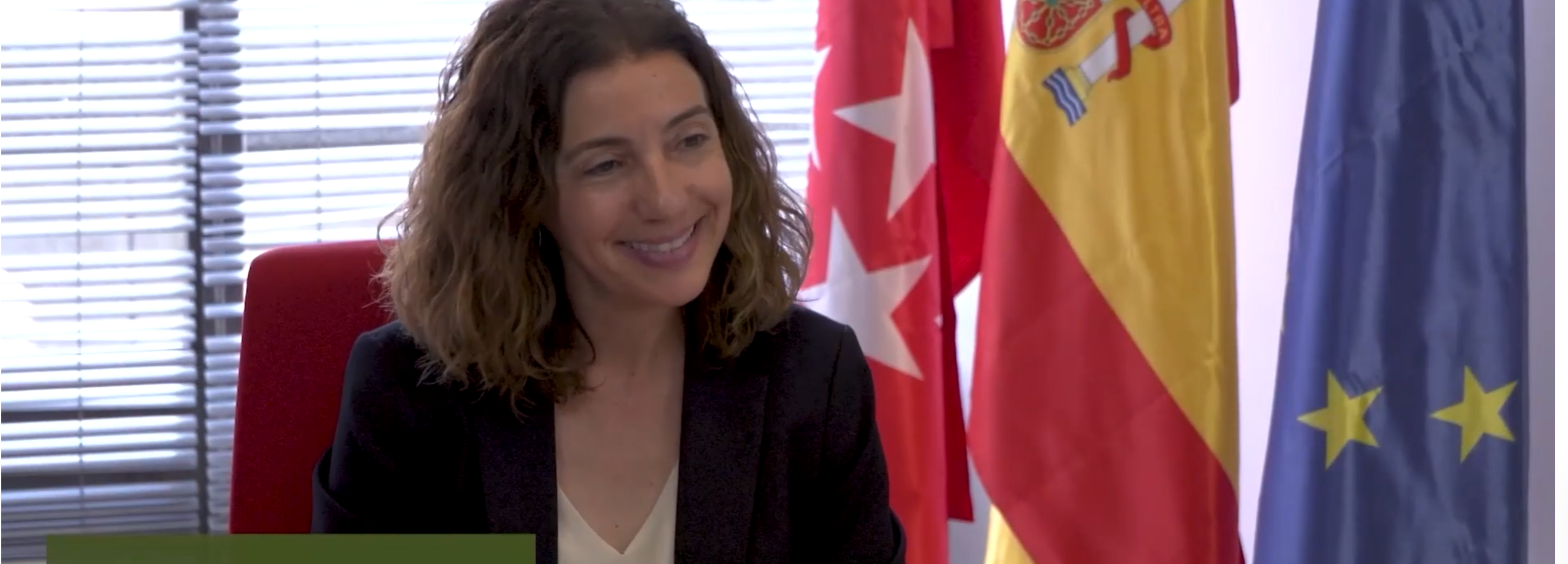
The documentary includes an interview with Irene Aguiló Vidal, Director General of Biodiversity and Forest Management in the Community of Madrid. She explains that wild boar have become one of the region’s main conflict species. According to the figures presented in the film, the Community of Madrid estimates its wild boar population at roughly 35,000 to 40,000 animals, while recorded captures increased from around 5,000 in 2016 to around 9,000 eight years later. The documentary also states that wild boar are involved in approximately 120 traffic accidents per year in the region, representing a major share of wildlife-related collisions.
These figures explain why public authorities need a broad management toolbox.
A toolbox, not a single solution
The documentary makes clear that bow control is not presented as the only answer. Preventive measures remain essential: preventing the feeding of wild boar, controlling access to waste, reducing dense vegetation near roads and residential areas, and keeping animals in their natural habitat wherever possible.
Live-capture cages, professional trapping, anaesthetic projectiles and other non-lethal or indirect methods also have a role. However, each method has practical limitations. Trapping can be disrupted by vandalism or public interference. Relocation is often not accepted by receiving municipalities and can create new conflicts elsewhere. Firearms are frequently unsuitable or prohibited in urban and peri-urban areas for obvious safety and disturbance reasons.
This is where bow control can fill a specific niche: silent, short-range, selective intervention in places where firearms cannot be used and where a rapid, targeted response is needed.
The Madrid model: trained specialists under public authority
The SCAES-FMC was created at the end of 2011 and began operating gradually from 2012. It was developed through cooperation between the Madrid Hunting Federation and the Madrid environmental authorities after an experimental phase with experienced bowhunters.
The documentary emphasizes that this is not ordinary hunting. It is a structured public-service model. SCAES controllers must demonstrate bowhunting experience, pass practical shooting tests, use appropriate equipment, and complete specific training for urban wildlife-control operations. The film mentions requirements such as previous hunting licences, recognized bowhunting qualifications, daytime and night-time shooting tests, compound bows with sufficient draw weight, and training in the safe use of elevated positions.
The controllers also train regularly on realistic 3D courses and in simulated operational conditions. This matters because urban control work is demanding. The target must be clearly identified, the shot distance must be controlled, the angle must be safe, and the arrow path must be certain. If these conditions are not met, no shot is taken.
Safety, selectivity and accountability
The operational approach shown in the documentary is based on patience and discipline. SCAES controllers work from elevated positions, usually in trees, so that arrows travel downward and into the ground after passing through the animal. The film states that average night-time shooting distance in SCAES reports is around 14 meters, which illustrates the close-range nature of this work.
The animal must be calm, properly positioned, and separated from other animals. The controller must have a clear view of the vital area and a safe background. The documentary stresses that shots are not taken when the animal is nervous, poorly positioned or when there is any uncertainty.
After each intervention, the procedure continues: tracking, recovery, documentation, respectful photographic records, official reporting and delivery of the animal to the designated public facility. Trained dogs may be used if recovery becomes difficult. This chain of accountability is essential. It demonstrates that the method is not improvised, but carefully integrated into a management protocol.
Results presented in the documentary
According to the film, SCAES-FMC reports an effectiveness level above 92%. By the time the documentary was produced, the service had selectively culled 729 urban wild boar, as well as 22 deer for phytosanitary study in a Madrid environmental reserve and 58 Spanish ibex in the Sierra de Guadarrama National Park. The documentary also states that the group has operated without incidents involving the controlled species and that municipalities continue to request its collaboration.
These results are presented as evidence that, under the right legal and technical conditions, bow control can become a reliable complement to other wildlife-management methods.
Why this matters for Europe
Many European regions face similar challenges: growing wild boar populations, urban expansion, traffic accidents, crop damage, and increasing public concern about safety and animal welfare. The Madrid case does not mean that every country should simply copy the same system. Laws, landscapes, public attitudes and wildlife populations differ.
However, the principles are highly relevant:
-
Bow control must be legally authorized and publicly accountable.
-
It must be performed only by trained and tested specialists.
-
It must be part of a broader wildlife-management strategy.
-
It must be selective, safe, silent and proportionate.
-
It must include clear reporting, recovery and ethical standards.
-
Public communication is essential to explain why intervention is sometimes necessary.
For the European Bowhunting Federation, this documentary is a valuable case study. It shows how bowhunting, when properly regulated and professionally applied, can serve modern society as a conservation and wildlife-management tool.
Urban bowhunting should not be romanticized, and it should not be misunderstood. In Madrid, it is presented as a serious, controlled and necessary response to a real management problem. It is precisely this seriousness — training, restraint, legality, accountability and respect for wildlife — that defines responsible bowhunting.
Watch the full documentary to learn more about the Madrid approach to urban wild boar management and the role of specialized bow controllers.